
EZ P6 vs EZ P3 Pro Touch compared
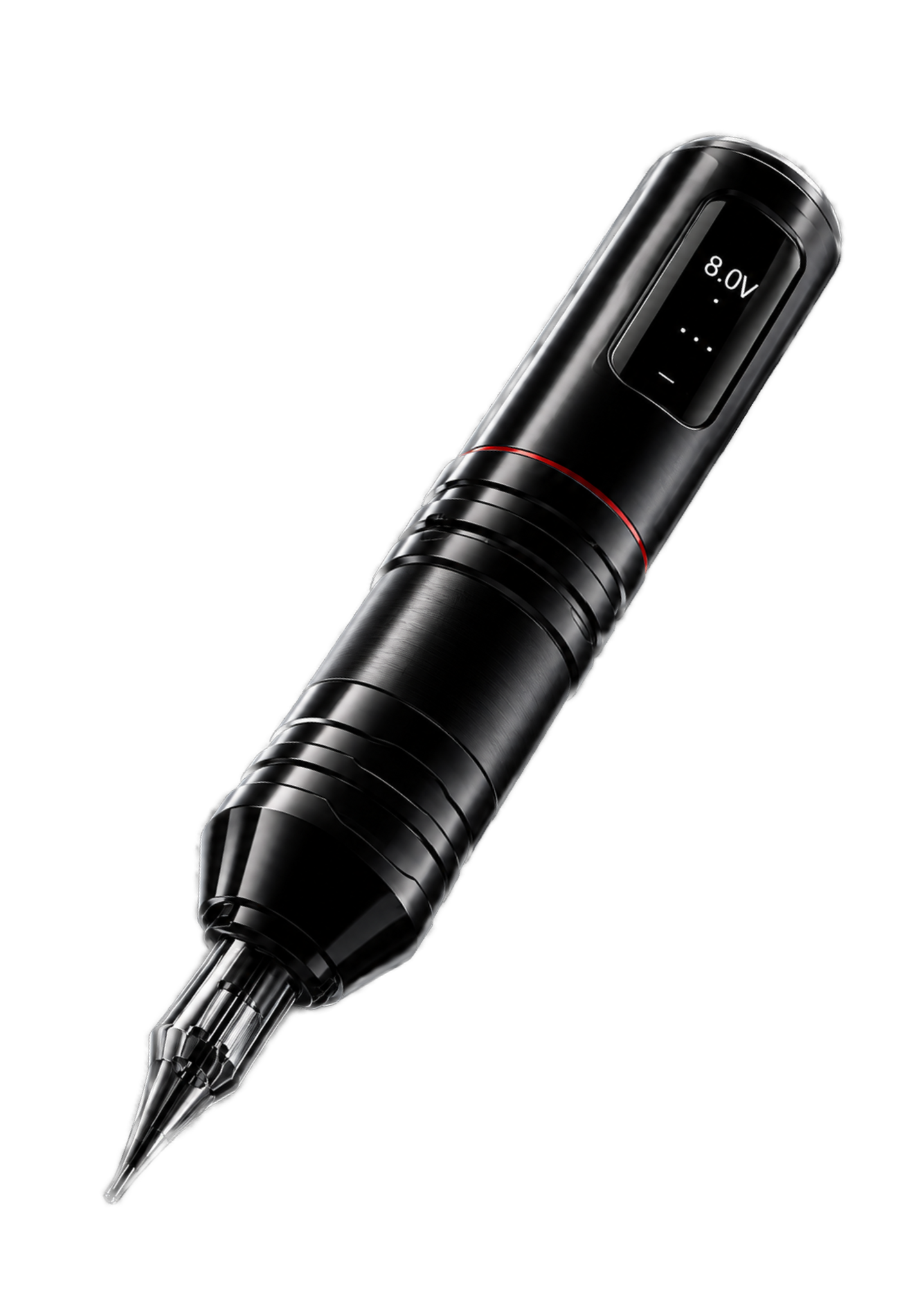
Two EZ wireless machines with adjustable stroke side by side: stroke, voltage, battery and runtime, from the manufacturer's declared data in the Odisage database.
At a glance
| P6 - adjustable strokeEZ | P3 Pro TouchEZ | |
|---|---|---|
| Stroke | 2.0-4.2 mm (6 positions) | 2.0-4.2 mm (2.0 / 2.4 / 2.8 / 3.3 / 3.7 / 4.2) |
| Weight | Not stated in the catalogue | 270 g |
| Weight condition | Not stated in the catalogue | with battery |
| Working voltage | 2-12 V | 4-12 V |
| Battery life | 6-8 hours below 8 V, about 4 hours above 8 V | about 6 hours |
| Battery | 2000 mAh | 2000 mAh, charging about 2.5 hours |
| Odisage Score | 81/100 | 75/100 |
The values are the ones declared by the manufacturer, shown as they are. Weights can refer to different conditions (with or without battery): check the condition line before comparing them.
Adjustable stroke: the same range
The two machines have the same adjustable stroke range, 2.0-4.2 mm, with six positions. For the P3 Pro Touch EZ lists the values (2.0 / 2.4 / 2.8 / 3.3 / 3.7 / 4.2 mm); for the P6 it gives six positions in the same range without listing them. In practice the two machines cover the same field on stroke: the choice is not decided there.
Voltage and runtime
The declared working voltage starts from different values: 4-12 V for the P3 Pro Touch (EZ recommends staying at or below 10 V) and 2-12 V for the P6, which starts from 2 V. Runtime is tied to voltage in different ways: for the P3 Pro Touch about 6 hours, with a charge of about 2.5 hours; for the P6 6-8 hours below 8 V and about 4 hours above 8 V. The battery is 2000 mAh on both. So it matters at what voltage you usually work: voltage and runtime should be read together.
Two different approaches
The approach differs. The P3 Pro Touch has a power module with a touchscreen; the P6 is presented by EZ with a high-torque motor and a lower minimum voltage. The manufacturer also describes the P6 as more powerful than the P3 Pro, but that is a commercial claim: the feel at work depends on the cartridge, the give and the hand.
Which way of working each suits
There is no better choice in absolute terms. If you work at high voltages and want a more predictable runtime, look at the P3 Pro Touch's figure; if you need to be able to go down to very low voltages, the P6 starts from 2 V. To narrow it down, use Find My Machine, and to read the sheets, the guide how to read a tattoo machine's specifications.
What the data does not tell you
The weight in the database is only present for the P3 Pro Touch (270 g with battery); for the P6 the EZ page lists 284 g without stating the condition, and we do not use it. Prices change and are not shown. For details, open the P6 and P3 Pro Touch sheets.
Related terms: Stroke · Voltage · Battery · Runtime · Weight
Related guides: 3.5 mm vs 4.2 mm stroke: what changes and how to read it · How to read the specifications of a tattoo machine · Cheyenne Hawk Pen 2 vs Critical Torque Lite compared · Cheyenne SOL Nova Unlimited vs Unlimited II compared · Emalla Grand G5 Pro vs Dragon Hawk Fold Pro compared
Alternatives and similar products
You may also like
- Article6 min read3.5 mm vs 4.2 mm stroke: what changes and how to read itStroke is the needle's travel: 3.5 mm and 4.2 mm are two common values on tattoo machine spec sheets. This article explains what they mean, how they compare, and why there is no universally better stroke.
- Article4 min readCheyenne Hawk Pen 2 vs Critical Torque Lite comparedTwo fixed-stroke pen machines side by side: 3.5 mm vs 3.8 mm stroke, weight, voltage and battery, from the manufacturers' own data in the Odisage database.
- Article4 min readCheyenne SOL Nova Unlimited vs Unlimited II comparedThe two generations of Cheyenne's SOL Nova Unlimited side by side: stroke options, batteries, runtime and weight, from the manufacturer's declared data in the Odisage database.

Stay one step ahead.
New tattoo gear comparisons, guidesand insights,straight to your inbox.